

How to Get Rid of Writer's Block: 9 Powerful Tips that Work
One of the most frustrating parts of writing a novel, short story, or piece of content is staring at the blank page, wanting to write, but nothing is coming to you. Your mind either feels blank and empty or so overwhelmed with thoughts that you don’t know where to start. So, how do you do it?
Start by realizing you aren’t broken or wrong for being stuck. Writer’s block is a common and beatable thing. It can be caused by fear, perfectionism, distractions, or many other things, which are all common emotions. So if you’re ready to push past all the feelings holding you back, these 9 tips will get you excited to start writing again.
Create (and stick to) a writing routine
One of the best ways to get rid of writer’s block is to create a writing routine. During this time, make yourself unavailable to everyone and remove all distractions. Turn off the TV, stay away from social media, and avoid using your phone during this time. Keep yourself planted in your designated writing spot until your time is up, and just keep going.
It can be tempting to grab your phone for a short break during this time, but with so many distractions in such a tiny thing, it’s easy to get carried away. To avoid this, set a timer on your phone and put it on the complete other side of the room until that timer goes off.
You may feel bored doing this, but that’s the point! Giving yourself time to just sit and be can lead to some of your best ideas. Your mind will be able to wander and explore without anything getting in the way.
When you first create your routine, it might be tempting to change it and see which days and times work best, but do your best not to make any changes for a few weeks. The only way a routine will work is if you are consistent with it. If, after those few weeks, you find there were times that you just couldn’t get yourself to write, ask yourself why they didn’t work and which one you think will work better. Use those observations to build a revised routine and see if it works better for you.
Set goals
Another great way to get rid of writer’s block is to set goals for yourself. Instead of looking at the project as a whole, break it down into smaller pieces, each with a reward for finishing. By looking at it in smaller chunks, it will all feel more manageable and less overwhelming, which can help to keep you more motivated and moving forward.
For smaller goals, try rewards such as:
Going on a long walk
Having a piece of chocolate
Getting a cup of coffee from your favorite cafe
Picking up a small treat from your local bakery
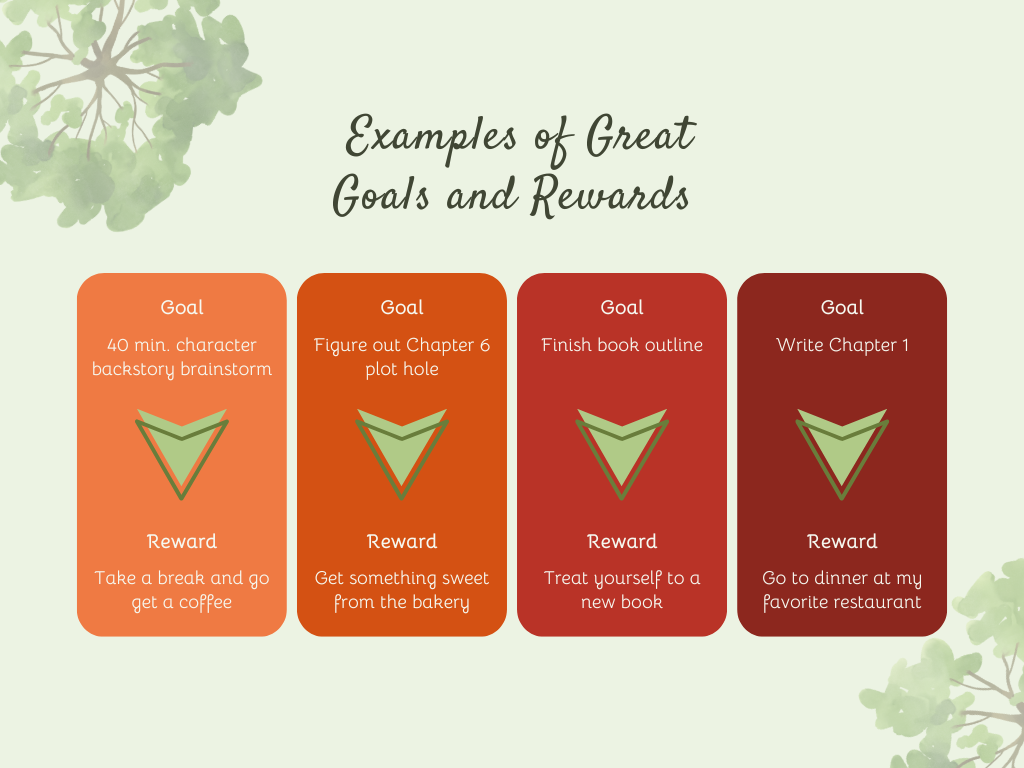
Bigger goals should have larger rewards. For example, if your goal is to finish writing chapter one of your novel, reward yourself with a special dinner out, a spa day, or something else that will remind you just how much you’ve accomplished.
Remember, you don’t have to be perfect
When writing, the point isn’t to get it right the first time. That’s why rough drafts exist. Practice makes progress, so just start writing and get into a flow. Then, once all of the words are out, you can go back and polish them up to make it exactly what you want.
For places you can’t seem to find the right words, try writing “in other words” or putting the sentence in parentheses. This will give you a phrase or symbol to search for when editing. Just pull up the find feature and search for each instance. This way, you allow the words and thoughts to just flow through you without stopping your process.
Don’t worry about having the whole story mapped out before you start. Start with the scenes that are already vivid in your mind; the rest will come eventually. By just writing what you have, you’ll get your creativity flowing and build momentum.
Give yourself permission to take a step back
Sometimes the best way to get rid of writer’s block is to take a step back from your project and do something else. When you walk away for a bit, you give your subconscious time to ponder and think. When it has this time, it can come up with ideas your overthinking mind couldn’t.
Doing something else creative can still allow you to flex those muscles without getting stuck in the same loop. Try things like crocheting or knitting, painting, dancing to your favorite playlist, doing a puzzle, cooking, or baking to give yourself something else to focus on.
While doing creative activities is great for keeping an active imagination, they’re not the only option. Doing something that gives your mind time to daydream and process is just as important. Try things like:
Taking a walk
Reading a book
Listening to music
Chatting with a friend
Watching a movie
Going on an adventure
Visiting a museum
Taking a nap
Try this Break the Block Bingo Card for a fun, low-pressure way to get rid of writer's block. Each square offers a simple activity to get your creativity blooming and fingers moving. Give it a try and see what clicks!
Read, read, and keep reading!
While reading is great for when you just need a break from writing, it’s also a great tool on its own to avoid writer’s block. When you read, you get ideas, inspiration, and learn what you do and don’t like. Read stories in your own genre for direct inspiration, and explore other genres for fresh perspectives and new angles.
While reading, it’s also a good idea to annotate as you go and mark things that stick out to you. Mark things that:
Interest you
Inspire you
Resonate with you
You like
You don’t like
You want to include in your own writing
You have questions on
Are the main ideas or key points of the story
Show symbolism, imagery, or other literary devices
You don’t understand
Plus, annotating books you read will be great practice for when you proofread and edit your own stories. Win-win, right?
Switch up your surroundings
Sometimes writing in the same location can cause you to feel stagnant and stuck. By getting up and taking your work to a new place, you find inspiration to help you get rid of your writer’s block. Try going to a coffee shop, park, library, or anywhere else you feel drawn to. You’ll be able to change your thought process and gather ideas from the people and situations around you. Maybe the person next to you becomes your next character, or a couple’s conversation sparks your next scene. Stepping out of your usual space can help you see things differently and inspire new ideas.
Have a brainstorming session
During a brainstorming session, allow any and all thoughts to come out, even if you don’t think they will work. Even if an idea doesn’t seem useful at first, it might lead to something else that fits perfectly. There are a few different ways to brainstorm that can help you get rid of writer’s block.
Make a timeline or story map
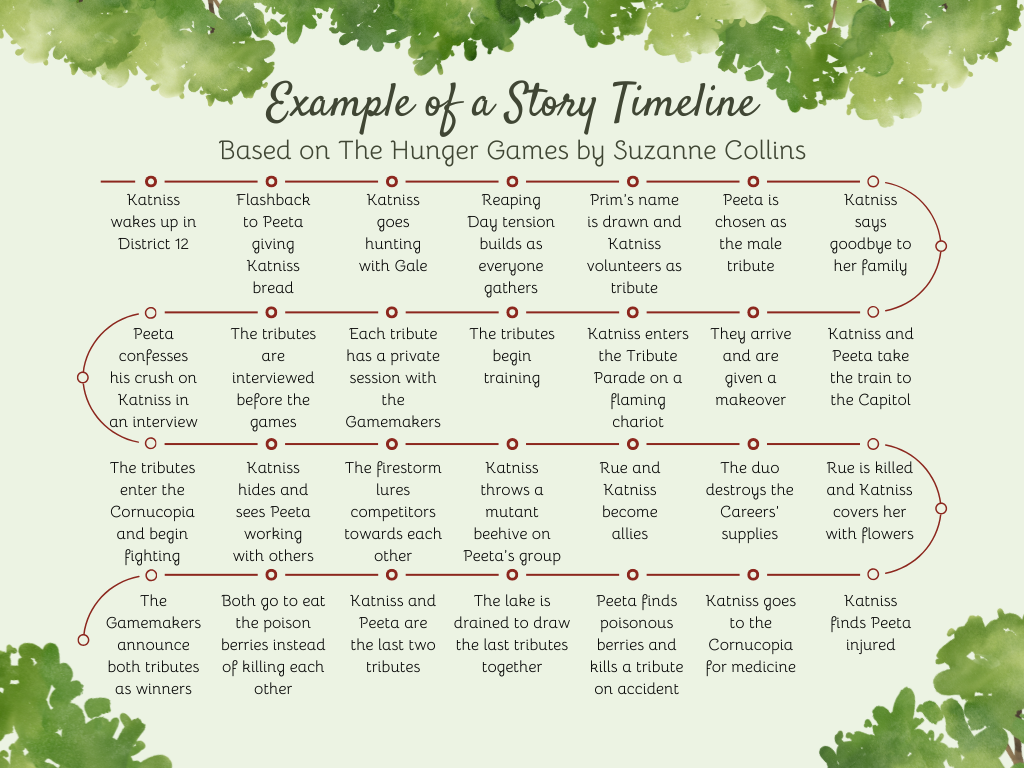
Creating a timeline or story map can help you get a good handle on the big picture of your story. You’re able to see where your story started, where it’s headed, and where it will end. This also gives you a chance to see any future blocks or plot holes that may arise during the writing process. Don’t worry if you don’t have all the scenes mapped out yet. Every brainstorming session is one step closer to your fully realized story.
Create a mind map of all your ideas
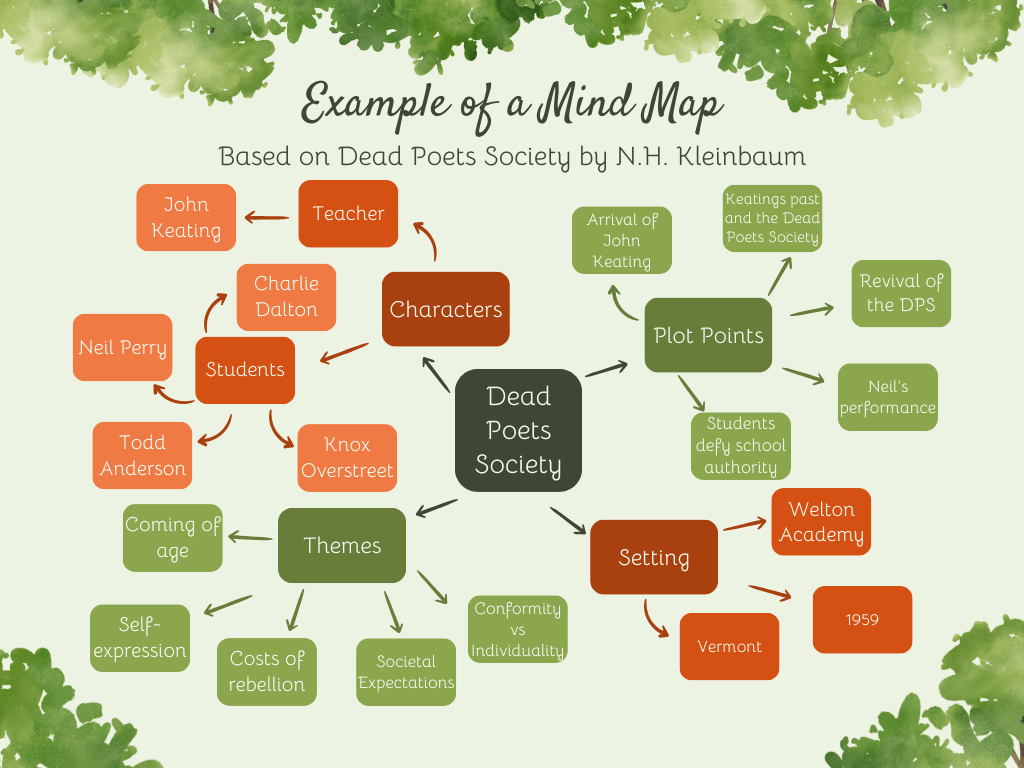
Mind maps are a great way to help you get rid of writer’s block. They allow you to see how each of your ideas, characters, and plot points connect. To create a mind map, write each idea in a circle and then draw lines between the ones that connect. Use different colors and line types to show the different relationships and themes. These can be done with either paper and pen or online. Some of the best digital mind map tools I’ve found are Canva, Miro, and MindMeister.
Organize your ideas with notecards
Grab a stack of notecards, and on each one write a thought, idea, character, or plot point you may have. Once you’ve gotten everything out, go through them and organize them. Group them, rearrange them in different ways, and see what connections you can make that you might not have seen before.
Call a friend and talk out your ideas
If you’re feeling stuck, chatting with a friend about the problem can help you get a clear solution. They might be able to give you some new insights that you never would’ve considered. And oftentimes, talking it through out loud can be enough to help you find the solution on your own.) Having a sounding board to talk and discuss with is truly one of the best tools to use to get rid of writer’s block.
Freewrite about anything
Freewriting is another great tool for getting rid of writer’s block. It allows you to write without stopping to overthink or get overwhelmed. To freewrite, set a limit and write until you reach it. You can either write for a set amount of time or until you reach a certain number of pages or words. Don’t stop to worry about grammar, organization, or whether it sounds good. Just keep writing and let the words flow onto the paper.
There are plenty of things you can freewrite about to help you get unstuck, like your characters, their backstories, or a challenging scene. Try writing scenes from other characters’ points of view to better understand your characters and their actions or to get new ideas for your next great plot point. If you’re not sure what to write, start with what you know and work from there.
Try a random prompt
Your freewriting doesn’t have to just be about your story, however. If you’re feeling extra stuck, try writing from a random prompt. There are some great ones on Pinterest or Reedsy. If you’re in the mood for a challenge, try Squibler’s Most Dangerous Random Prompt Generator. Just choose your time limit, decide if you want to pick one of their prompts or a random one, and then you’re off! Once you click start, however, you have to keep writing or all your progress will be lost. This is great for forcing you to keep moving and writing without thinking too hard about it.
Try journaling
When you journal, you get an insight into yourself and where you are, physically, emotionally, and mentally. It can allow you to see why you’re afraid to write or feel stuck in general. When journaling, ask yourself questions like:
Do I feel pressure to succeed?
Do I feel pressured to compete with others?
Have I lost sight of my story or lost interest in where it is going?
Am I lacking confidence? Why?
When was the last time I wrote?
What has kept me from writing for so long?
What made me want to start writing again?
How am I feeling overall?
What inspired me to start writing in the first place?
Reflecting on these questions, and many others, can uncover what’s holding you back and reignite your writing fire. For best results, try journaling by hand. This helps you slow down and access thoughts you didn’t know you had.
Try a new writing tool
The last tip for getting rid of writer’s block is to try a new tool. Sometimes, switching things up by using something new for your character development, organization, editing, or word processing can make a surprising difference. Just this small change can give your mind a space to be creative in new and different ways.
Not sure where to start? Here are a few options to check out:
OmmWriter
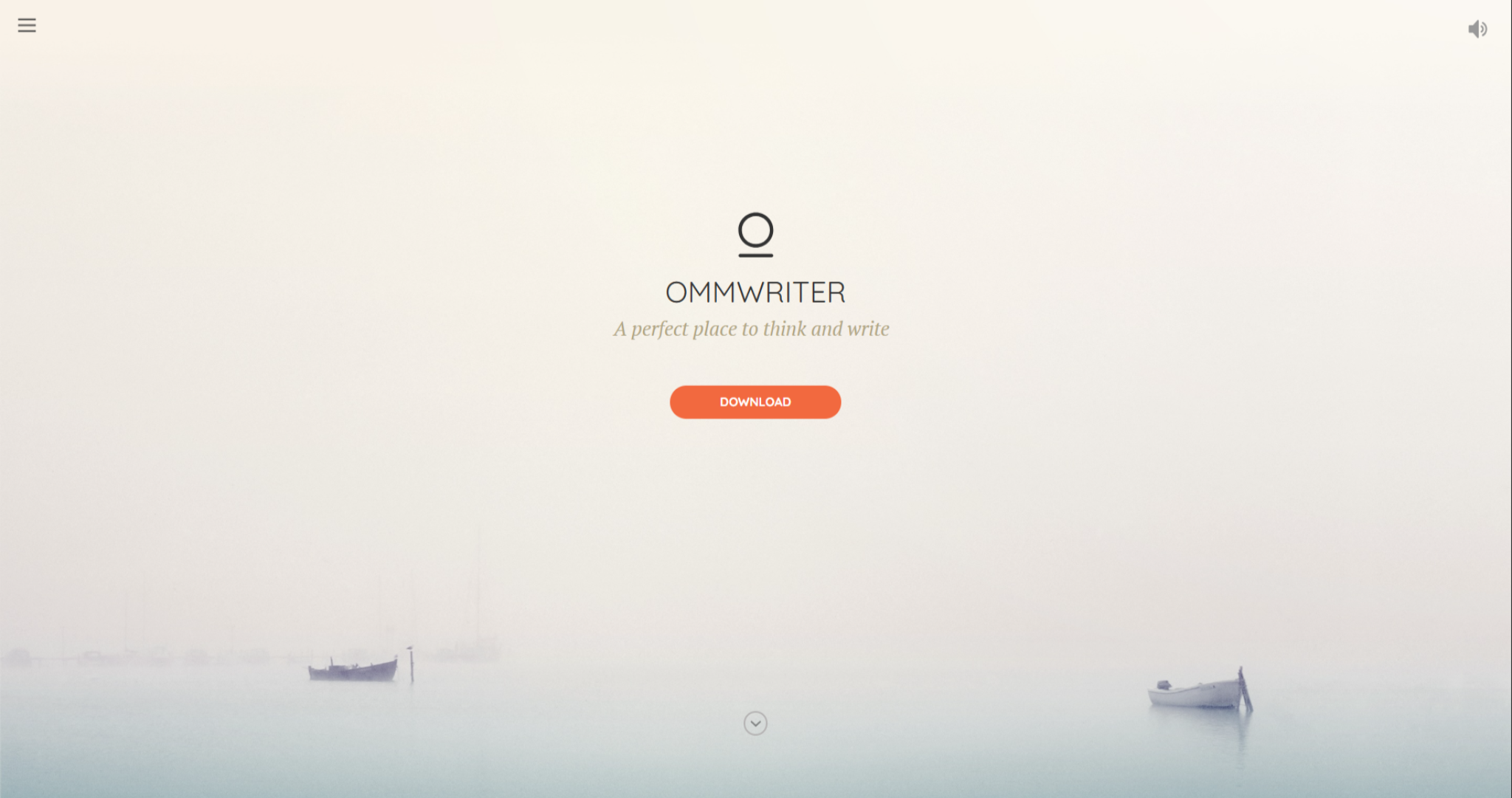
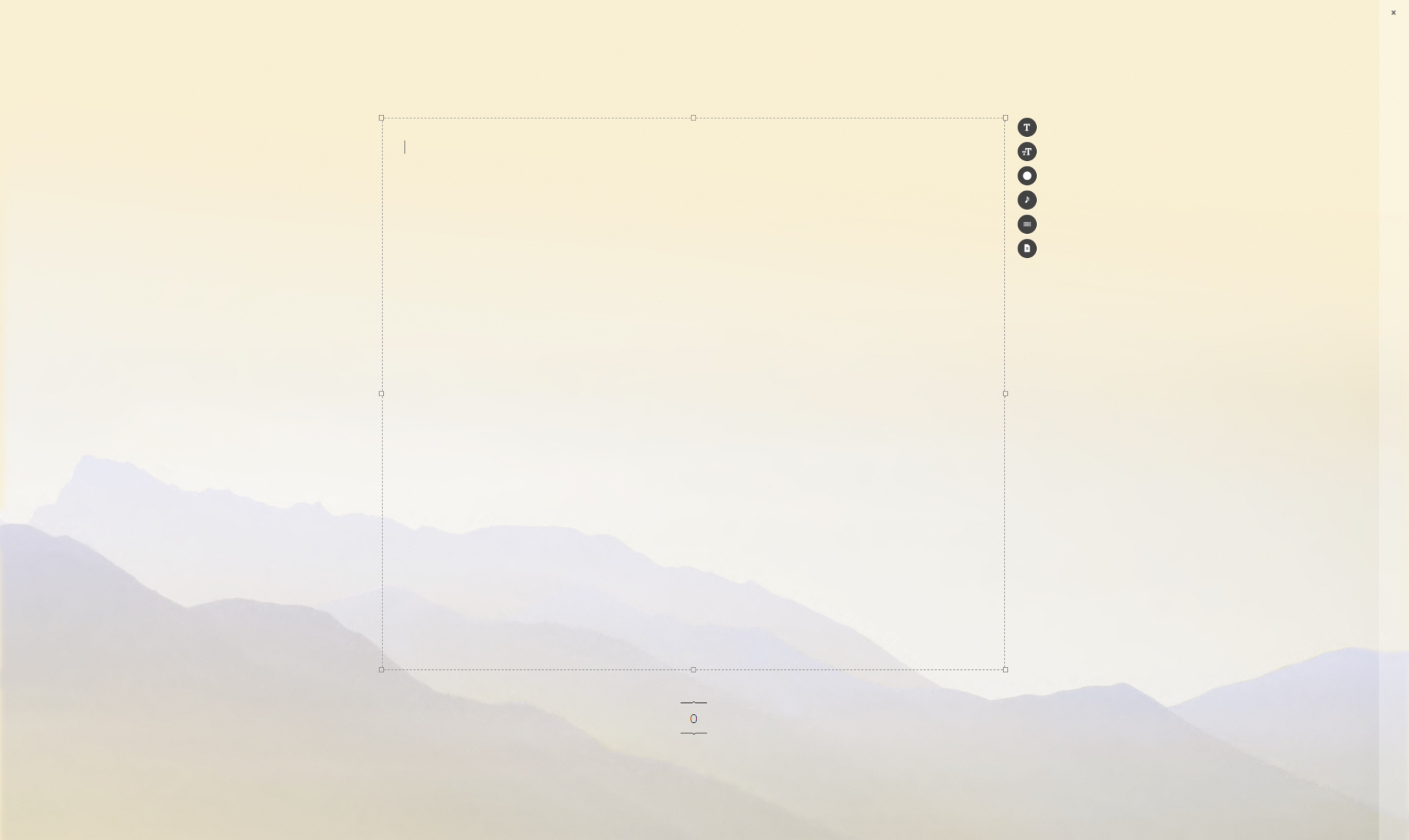
OmmWriter is a great choice for writing and editing. This app opens in full screen to block out all distractions and help you concentrate. The minimalist design gives you just the tools you need to write and nothing more to distract you. It also lets you personalize your space with backgrounds, music, fonts, and typing sounds.
Reedsy Studio
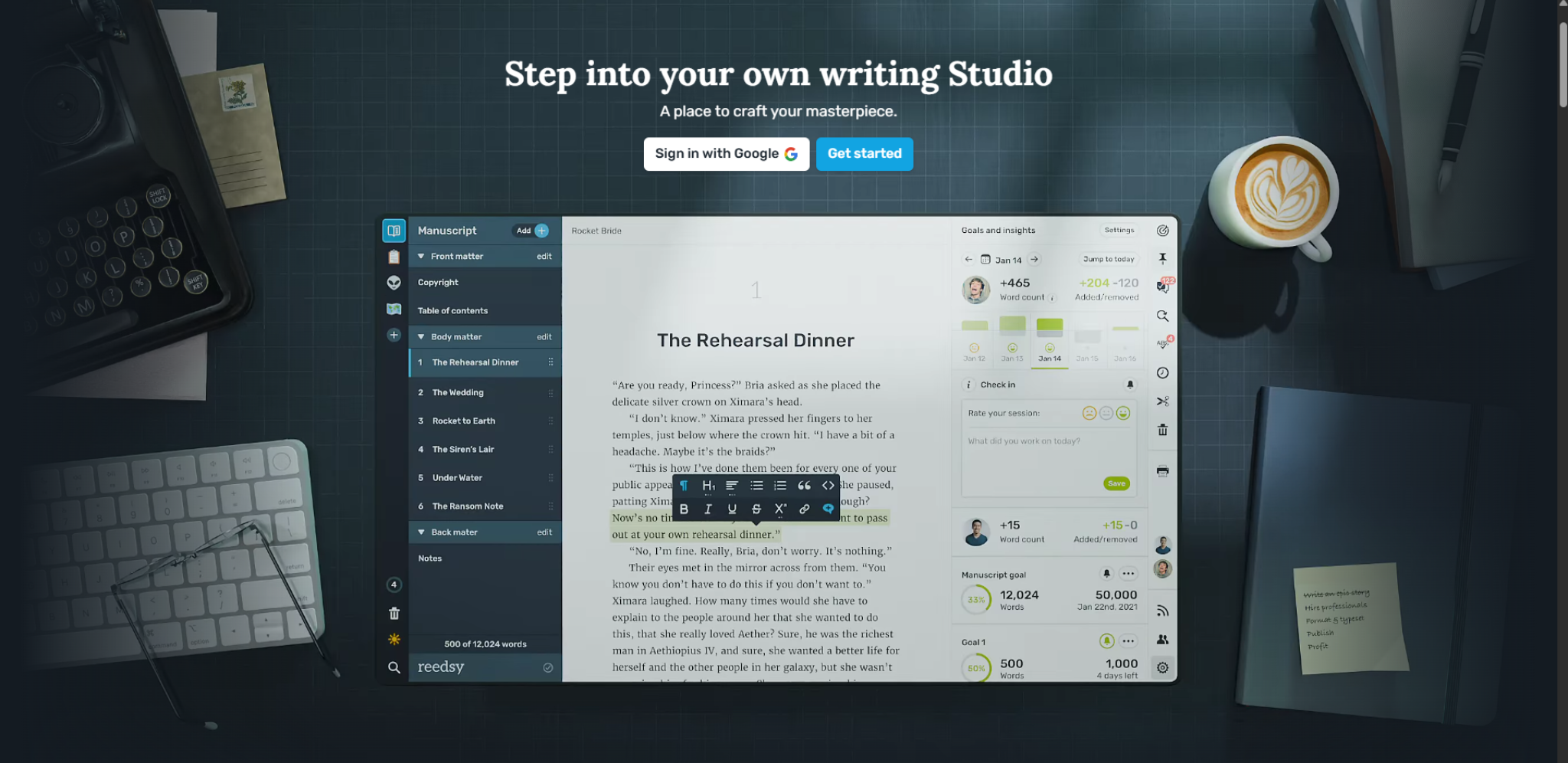
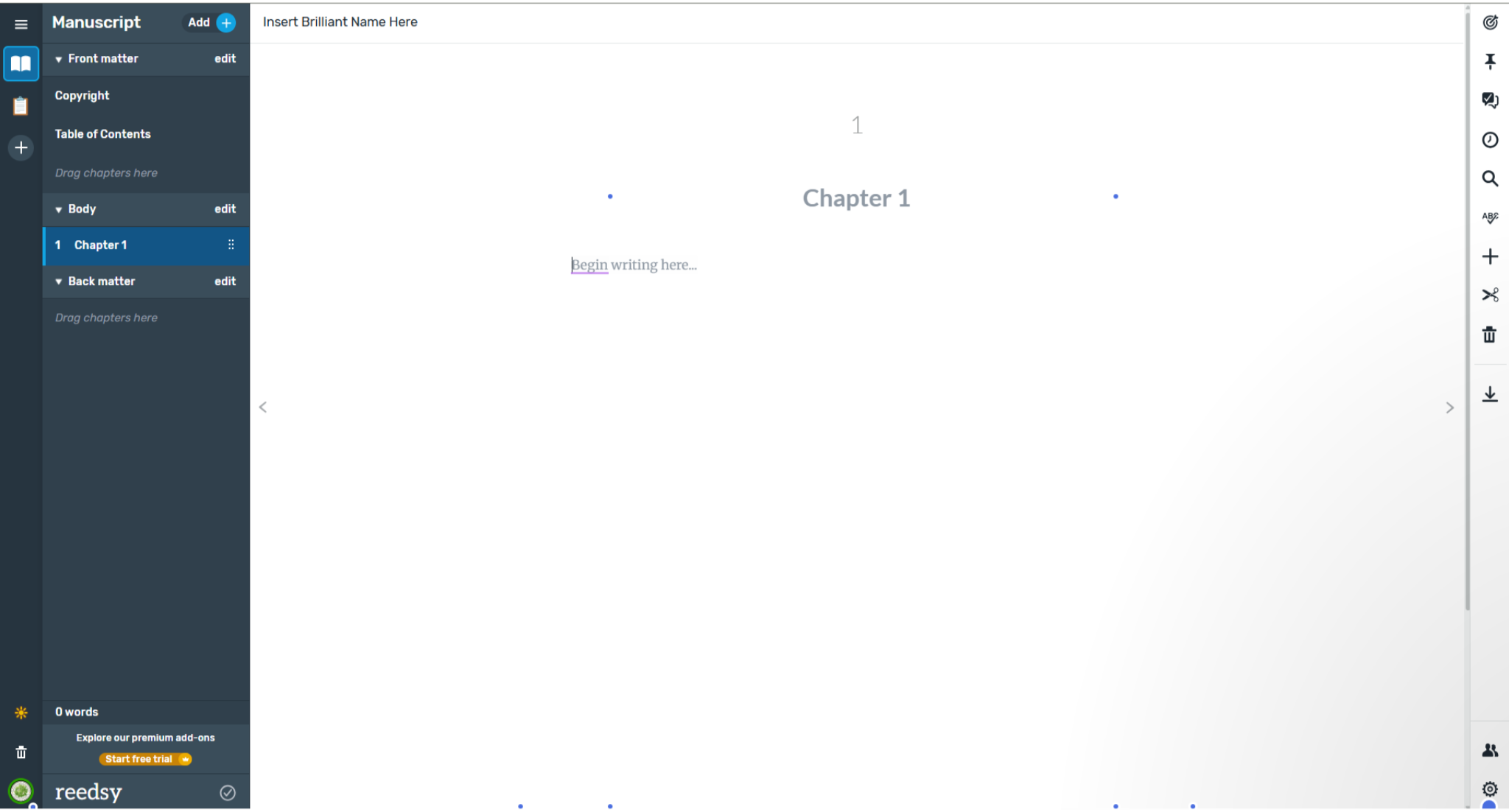
Reedsy has tons of great tools for everything from character creation to plot generators, but one of the best tools they offer is the Reedsy Studio. Whether you’re writing, editing, drafting, formatting, or collaborating with others, this all-in-one tool is designed to support you through the entire process.
Noisli
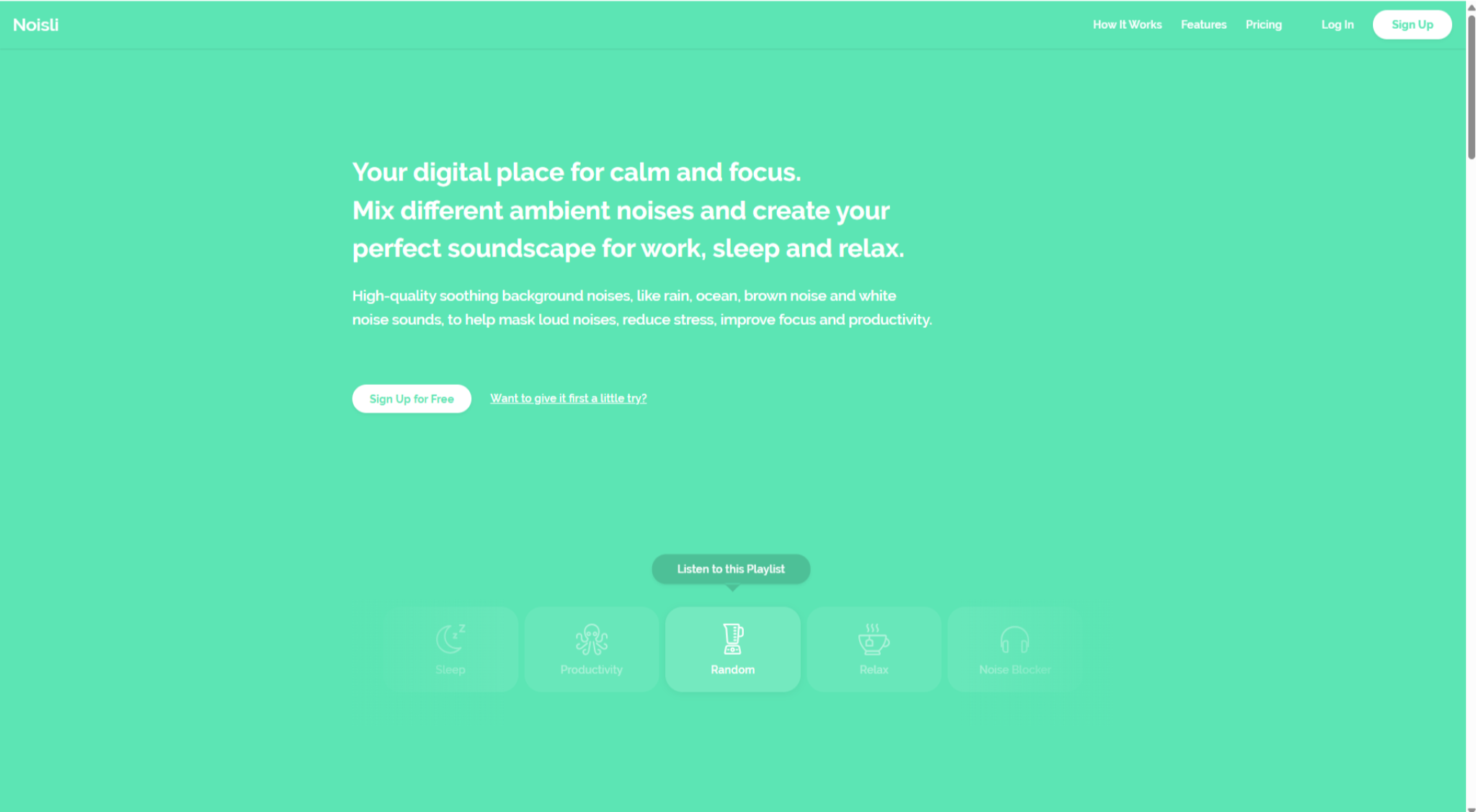
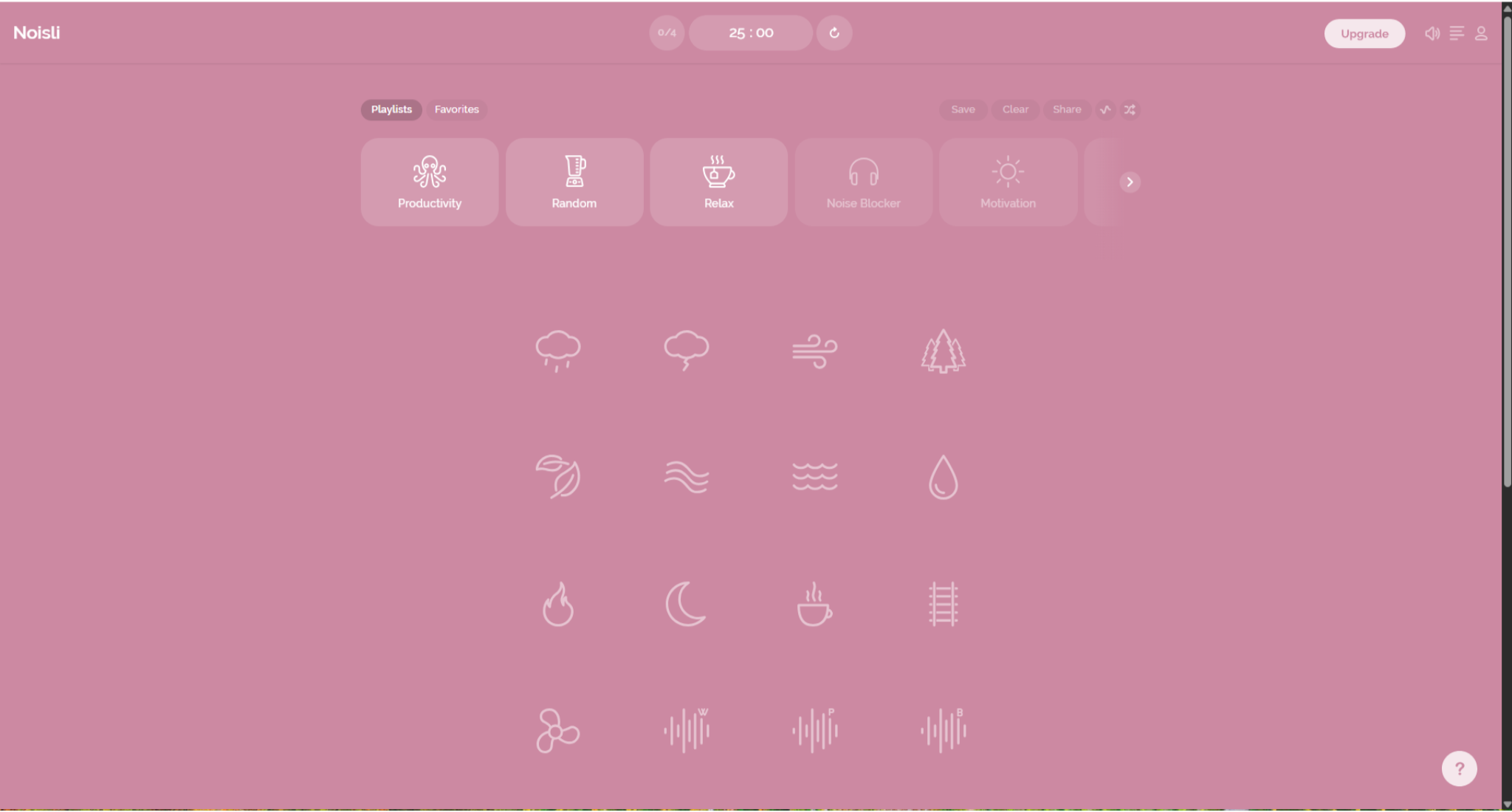
Noisli helps you stay calm and focused through ambient background noises and soundscapes. You can choose between curated playlists or make your own with a variety of different sounds. Whether you want to feel like you’re sipping coffee next to the fireplace or under the trees in the rain, this app can set the perfect mood.
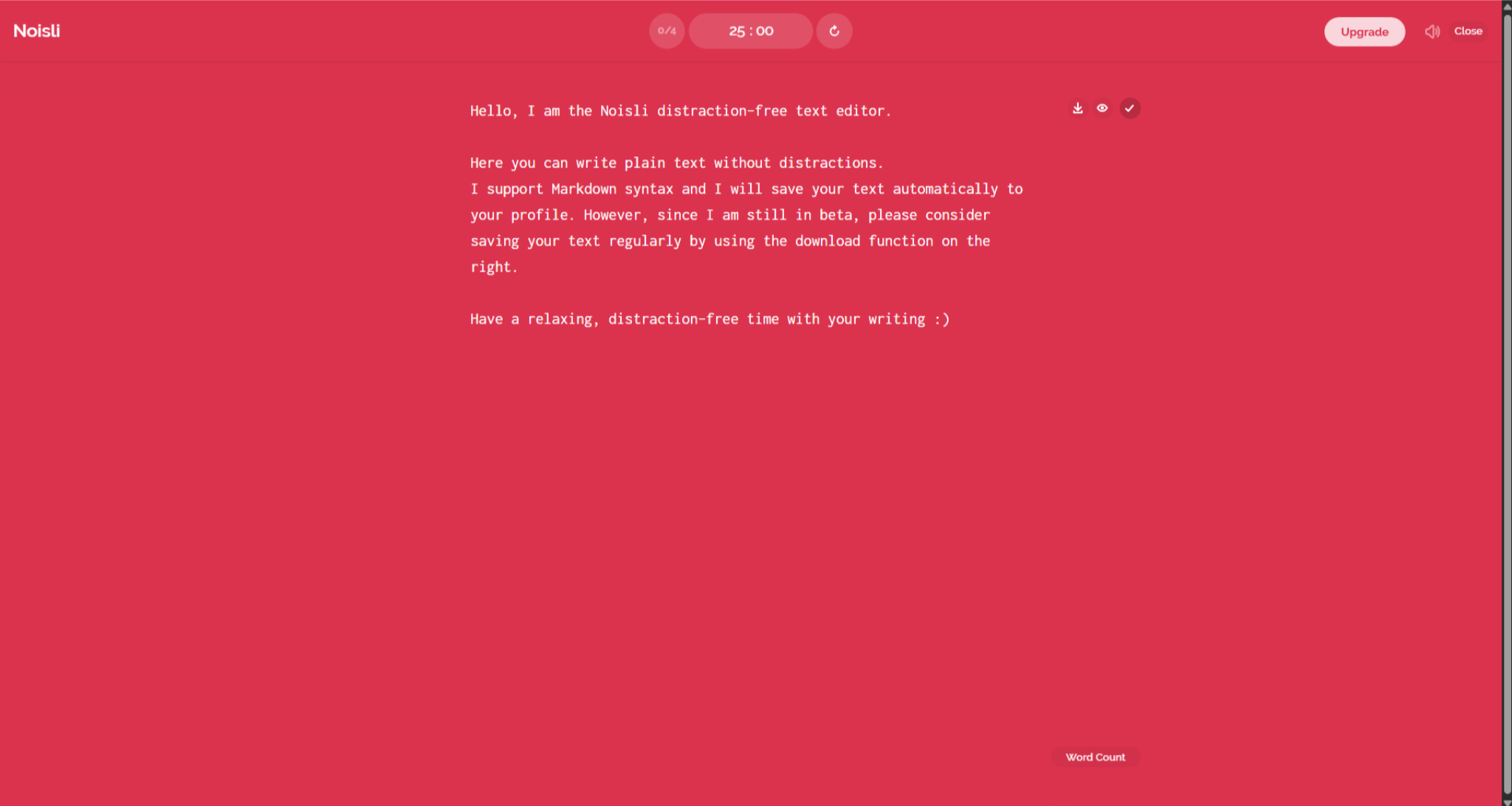
Noisli also offers a timer and a distraction-free text editor so you can concentrate fully on your writing.
For more tools you can use to master your next writing project, check out this post on the best writing tools to use.
Your next chapter starts now
While writer’s block can be frustrating and may make you feel like you’ll never be a “real” writer, it’s a perfectly normal part of the creative journey. Everyone hits a writing wall at some point in their writing journey. The key is to keep going. Try different tips, like the ones mentioned above, and see what works for you.
Remember, your story matters. Everyone deserves to express themselves and share their greatness with the world. The sense of accomplishment and pride you’ll feel when everything comes together will be worth every step and hurdle.

