
Brand Style Guides Made Easy: The Elements That Matter Most
Having materials that are consistent and cohesive across various channels builds awareness, trust, and credibility for your business. But how can you ensure that this happens, especially when you have multiple people creating content?
A brand style guide can help you create marketing materials, like brochures, business cards, and ad campaigns, that align with your brand and really show who you are.
What is a brand style guide?
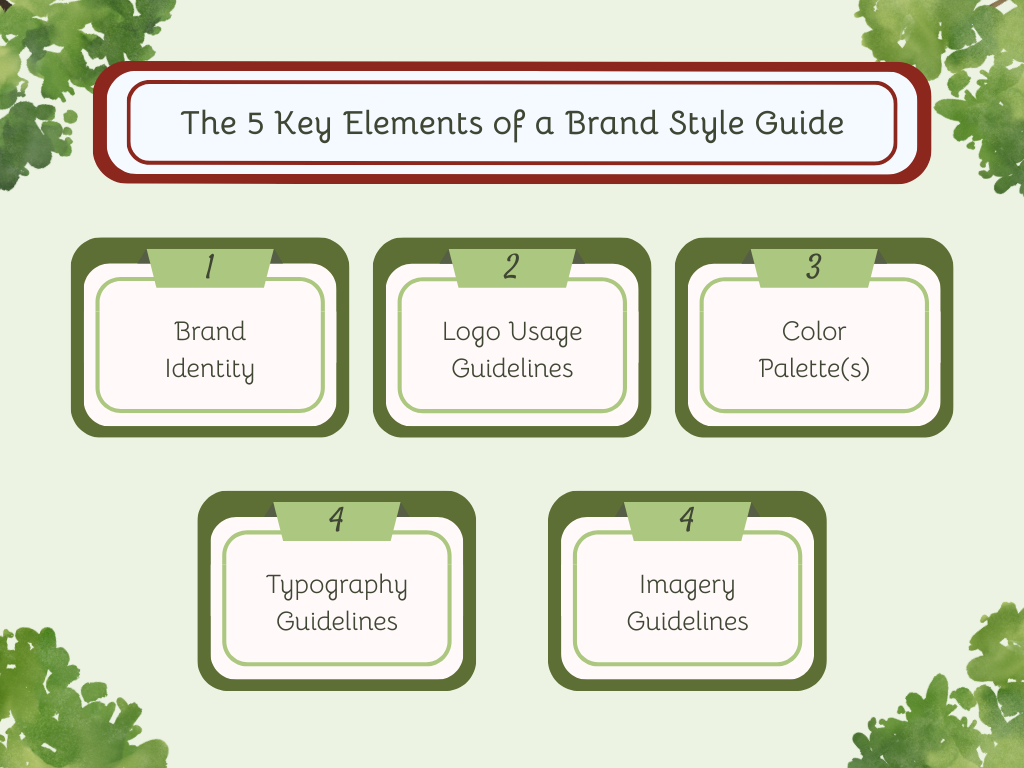
A brand style guide covers all of the elements of your business, including:
Brand identity
Logo usage
Color palette
Typography
Imagery
It details the rules, standards, and instructions for how your materials should look and sound. Having this guide ready for your team makes it easy for them to create materials that come to life and embody your business.
Elements of a Brand Style Guide
Understanding the different elements that should be in a brand style guide can help you create guidelines that are clear for your team and anyone who is creating content for your business.
Brand Identity
The first section you should include in your brand style guide is the brand identity section. This includes information, like:
Your business name and tagline
Your mission statement
Your core values
Your brand personality
Your brand voice, tone, and communication style
Your target audience/market
Your unique selling proposition

These things help your team understand who you are and how you want to come across to your audience.
Logo Usage
It’s important to include all variations of your logo with the essential color variations in your brand style guide, as well as instructions on when to use each one. Make sure to include the full logo, text logo/wordmark, single-line logo, square logo, transparent/non-transparent logos, and any others that may be used.
You can also include the proportions for the logos and any dos/don’ts. For example, you could mention when to use or not use certain logos on different backgrounds and channels, what dimensions and alignments to use or avoid, the maximum and minimum scaling, and what file types and formats to use or avoid.
Color Palette
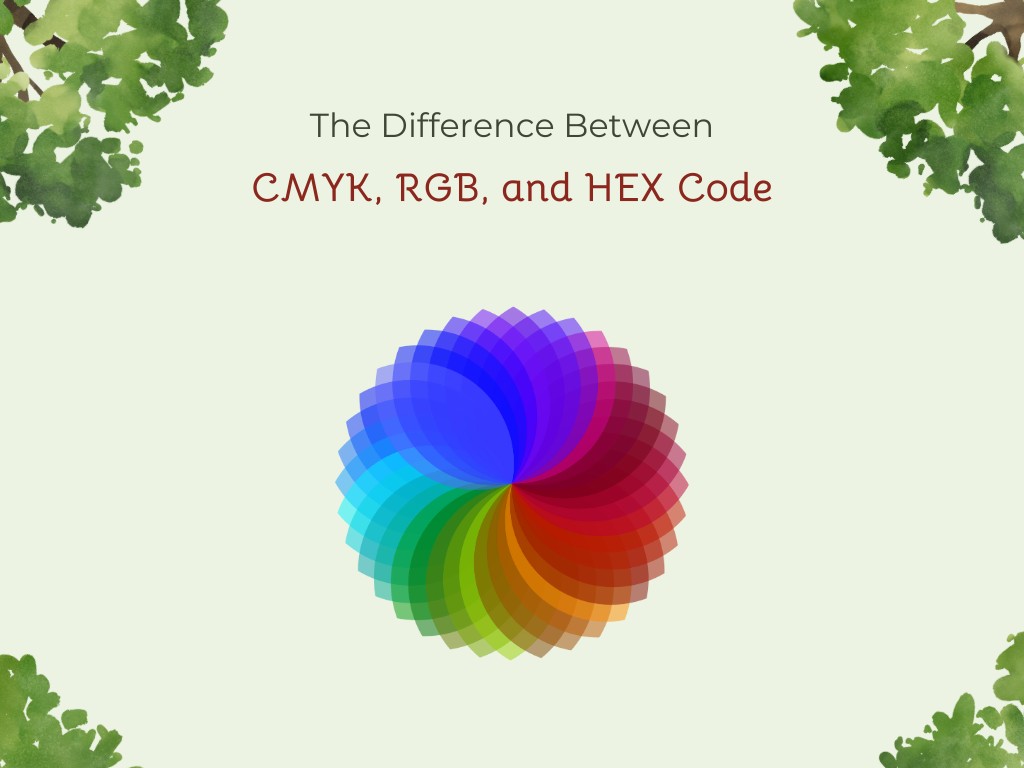
Your brand style guide should include the primary color palette you use for your business with its specific color codes (CMYK, RGB, or HEX), as well as any secondary or gray-scale palettes you may have.
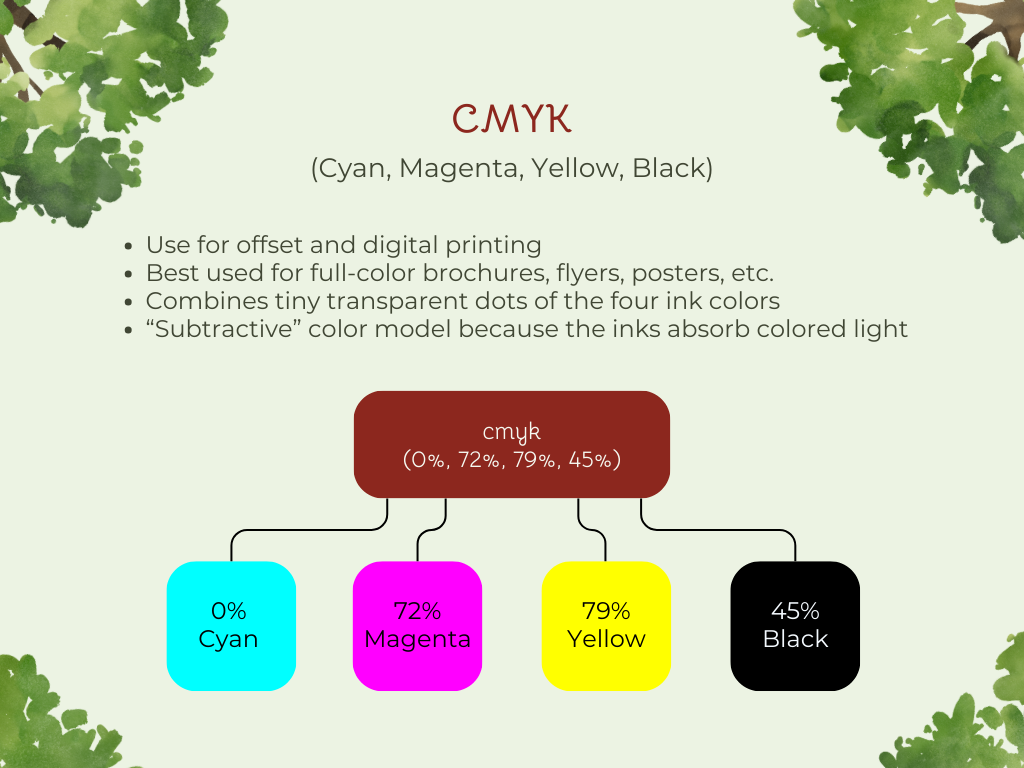
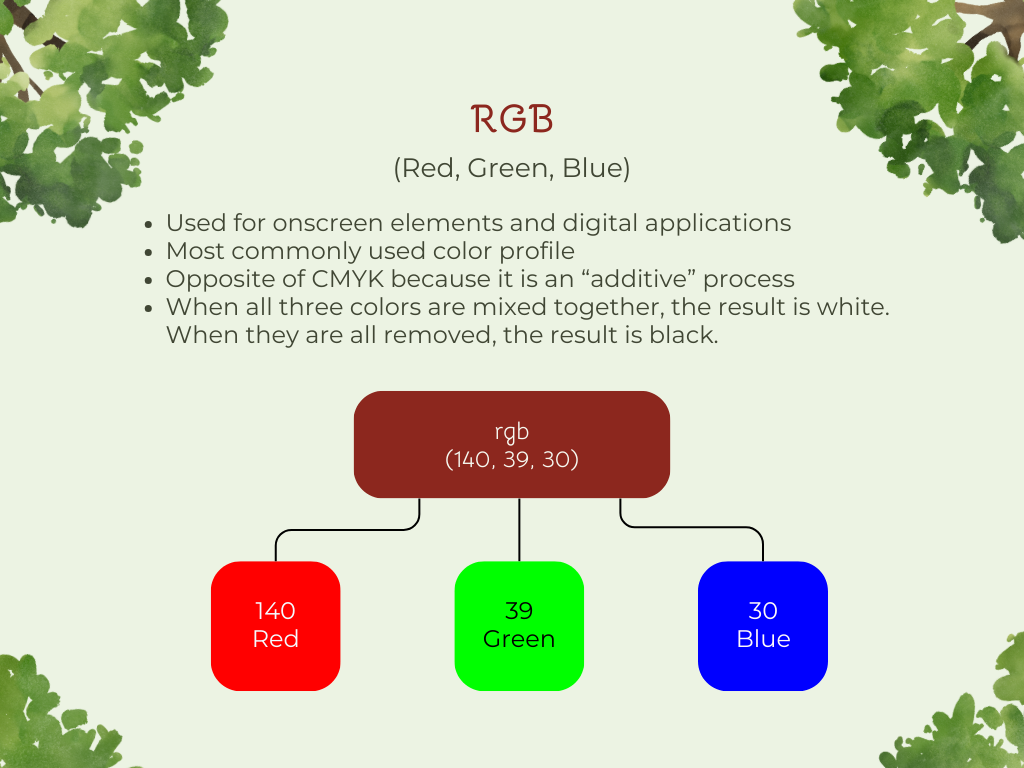

Include usage guidelines for backgrounds, text, highlights, accents, and more, so people understand what colors should be used where and when. It’s also best to include any restrictions or tips and examples of popular color pairings or color pairings to avoid.
Typography
Your typography section should include all approved guidelines, including:
Fonts
Font styles
Font weight
Sizing
Spacing
Colors
It’s a good idea to include two to three typefaces that designers can use, as well as any grammar conventions your brand may follow. Does your business use the Oxford comma? What title case format should be followed? Having the answers to questions like these takes away any confusion and keeps your materials consistent across all areas.
Imagery
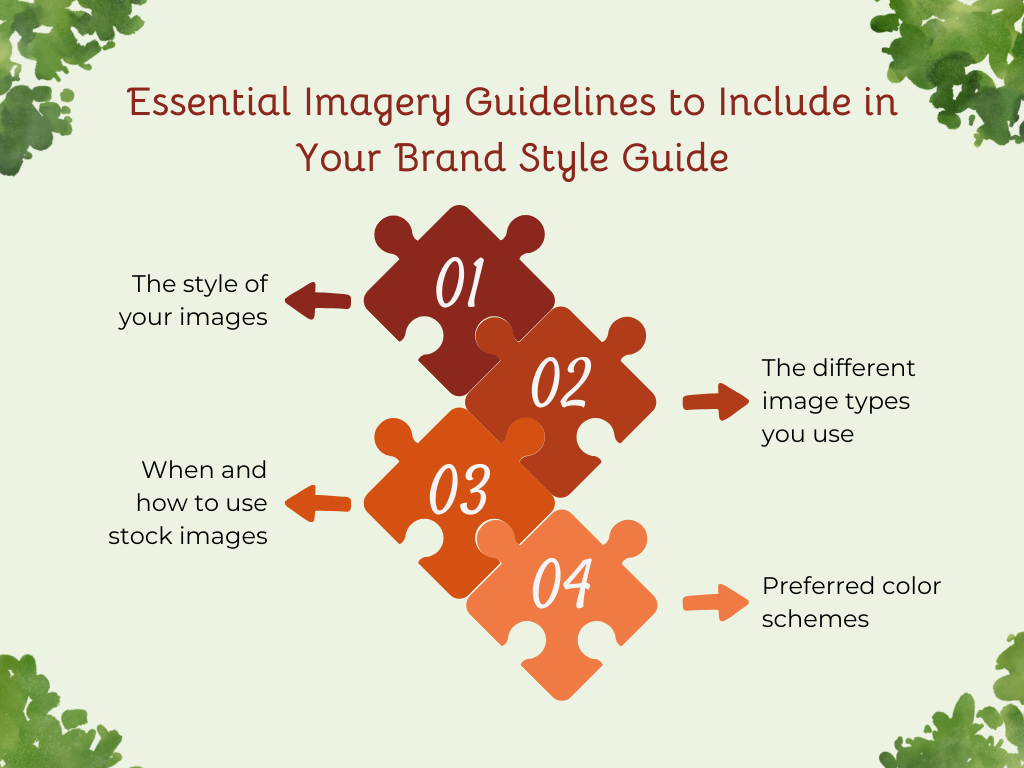
Including guides and examples on the types of images and how to use them in your brand style guide helps to keep your brand cohesive and aligned. Mention things like:
The style of your images (candid, posed, professional, fun casual, etc.)
The different image types you use (illustrations, photography, iconography, patterns, and design elements)
When and how to use stock images
Preferred color schemes for images
If your business also uses specific icons, this would be a good place to include them. Show examples of all approved icons, use them, and explain any style or spacing guidelines to ensure they’re used consistently.

Examples of Great Brand Style Guides
Looking at brand style guides from existing, successful businesses is a great way to get ideas and learn how to create an effective style guide for your business. These 10 brands include the key elements mentioned above in a way that makes it easy for readers to understand their brand.
NASA
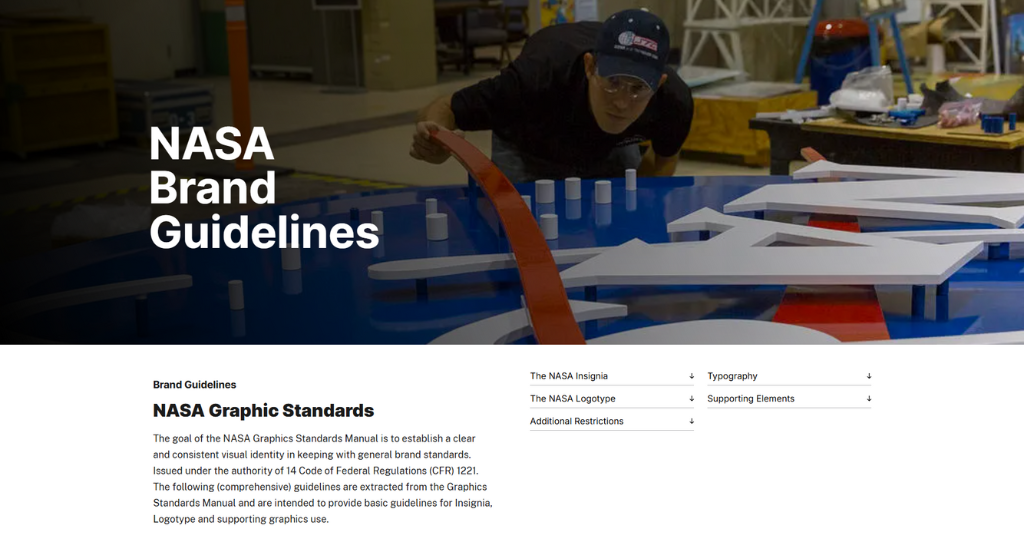
NASA includes the key elements needed in a great brand guide, including their colors, variations of their insignia/logo, typography, and more. They even have a breakdown of their insignia, examples of correct and incorrect insignia centering, insignia violations, and guidance for merchandising requests, media usage, and more.
Barnes & Noble
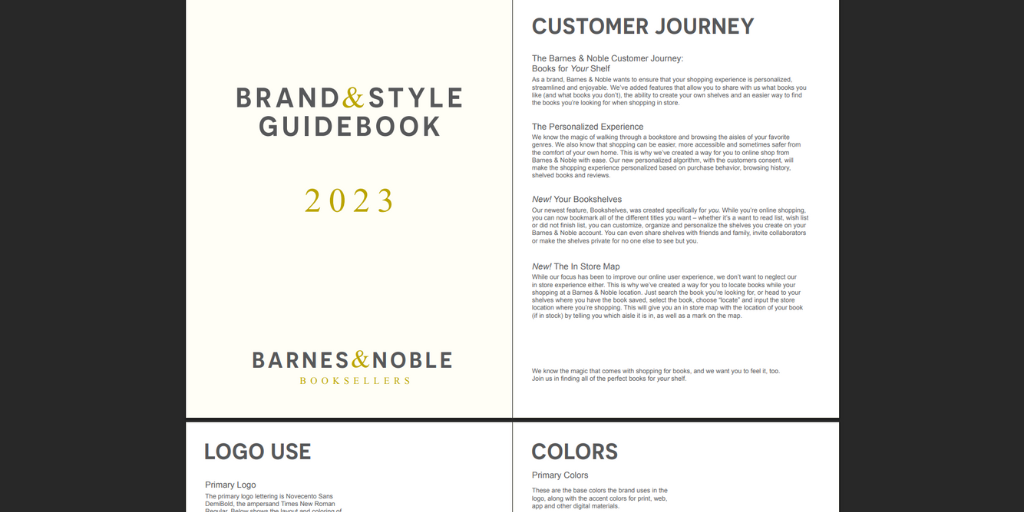
Barnes and Noble has a great brand guide that includes information on their customer journey, primary and secondary logo usage, primary and text colors, and typography examples. There’s also a section for their products that explains the digital design display ratios that should be used.
AirBus
AirBus’s brand style guide is a great example of an interactive and easily updated brand style guide. They include a section at the top of the page for any notices or changes that have been made recently. Their guide also includes pages about their brand and guidelines, as well as information on UX/UI guidelines and resources.

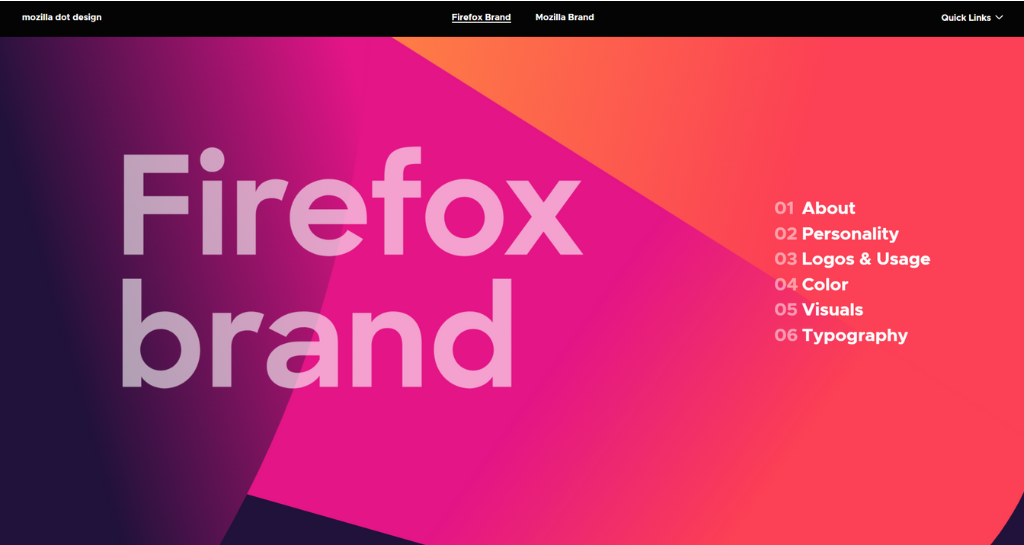
Firefox
Firefox is another business that has an easily edited webpage for its guide. They include information about their brand, audience, voice & tone, logos & usage, and guidelines and logos for their specific products.
Some of the sections are also broken down and described using their four core values: opinionated, open, radical, and kind. This helps to make sure every aspect of the business aligns with these core values.
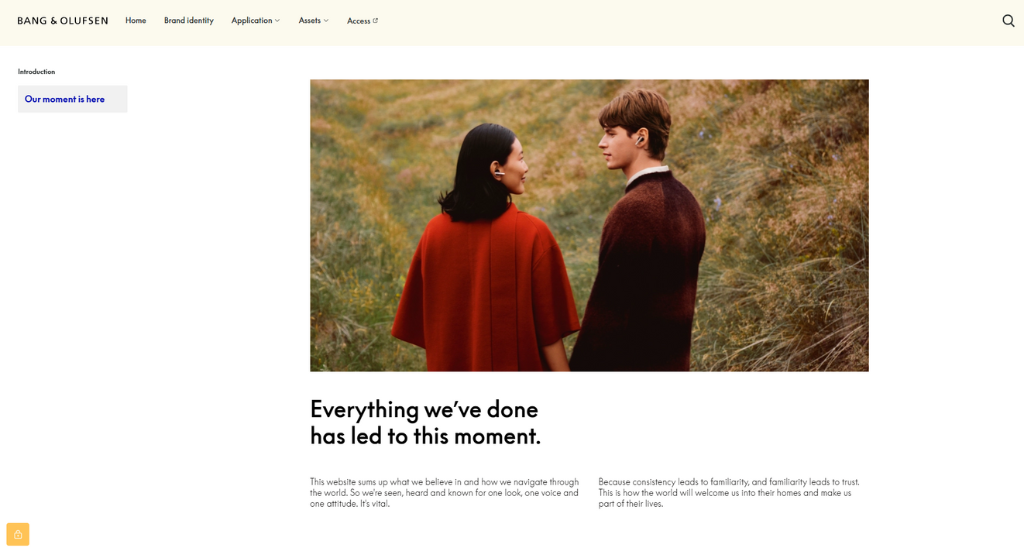
Bang & Olufsen
Bang & Olufsen kept their brand style guide simple, but effective. There are two main sections for their brand position and visual identity. They include the usual information like their colors, imagery, wordmark, logo, and typography. There are also sections for layout guidelines and brand codes, ensuring that every aspect of the brand is covered.
National Geographic
The National Geographic brand guide is highly detailed. This guide has information on their overall brand, brand behavior, brand “ingredients”, brand volume, print guidelines, and social/digital guidelines. They also include sections for on-air promo, navigation, and idents.
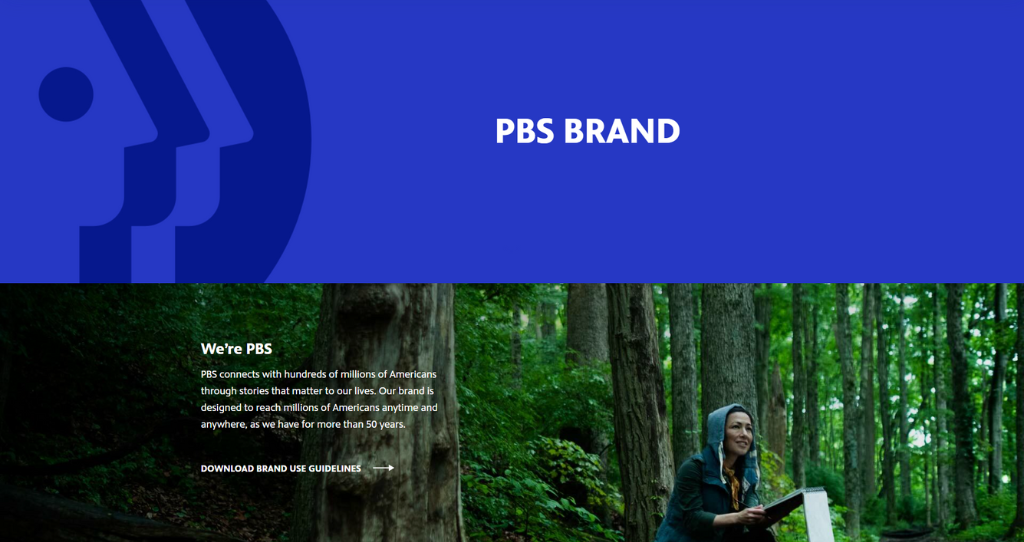
PBS
PBS has a great guide that walks you through their logo, logo versions, improper logo uses, color guidelines, typography guidelines, and imagery guidelines. They also include a short FAQ at the end for additional information, as well as a contact section to reach out or visit their source.
IKEA
IKEA’s brand style guide is another simple example that includes their primary logo and variations, guidelines on breathing space, incorrect logo usage examples, color palette, typeface with samples, and the corporate contact information.
Discord
Discord has a great brand style guide that includes its logo, symbol, colors, and legal brand guidelines. It also includes a link to their brand kit and a Banners section for easily downloadable banners.

WWF
WWF’s brand style guide is another example of a great guide that includes the most important information, like their mission statement, logo, color palette, and typography. These sections include even more guidelines, such as a glossary of terms, color swatches, name use guidelines, and country or practice identifier guidelines.

If you want to check out more brand style guides from other businesses, Branding Style Guides is a great place to look.
Building your brand has never been easier
Creating content that always aligns with your brand and business can seem like a daunting task, but it doesn’t have to be with a brand style guide. By outlining your brand identity, logo usage, colors, typography, and imagery, you give your team a clear roadmap for creating consistent, cohesive materials for every platform.